TASK
Names the work
“Add favorites.”

Turning requests into verifiable outcomes.
In the second chapter of The Little Prince, a pilot crashes in the Sahara and is met by a small boy with one demand: draw me a sheep. The pilot draws one. Too sick. He draws another. Too old. A third — that's a ram, it has horns. Every drawing was reasonable. Every drawing was wrong.

Every drawing was reasonable. Every drawing was wrong.
The pilot received a request. The prince evaluated it against a model he never stated — and no drawing could satisfy a specification that lived entirely in someone else's head. Only when the pilot gave up and drew a box with three air-holes, telling the boy the sheep was inside, was the prince finally happy.
This is the exact shape of every prompt we hand an agent. Agents cannot see requirements we never externalize. They optimize against the context we provide — not the intent we forgot to express. Missing boundaries don't stay missing; they become invented decisions.
To see the gap, we need something real to break. Here is the baseline: a small catalog app called Field Supply. Card navigation, a detail view, search, a category filter — and six passing tests that describe all of it. This is behavior worth protecting.
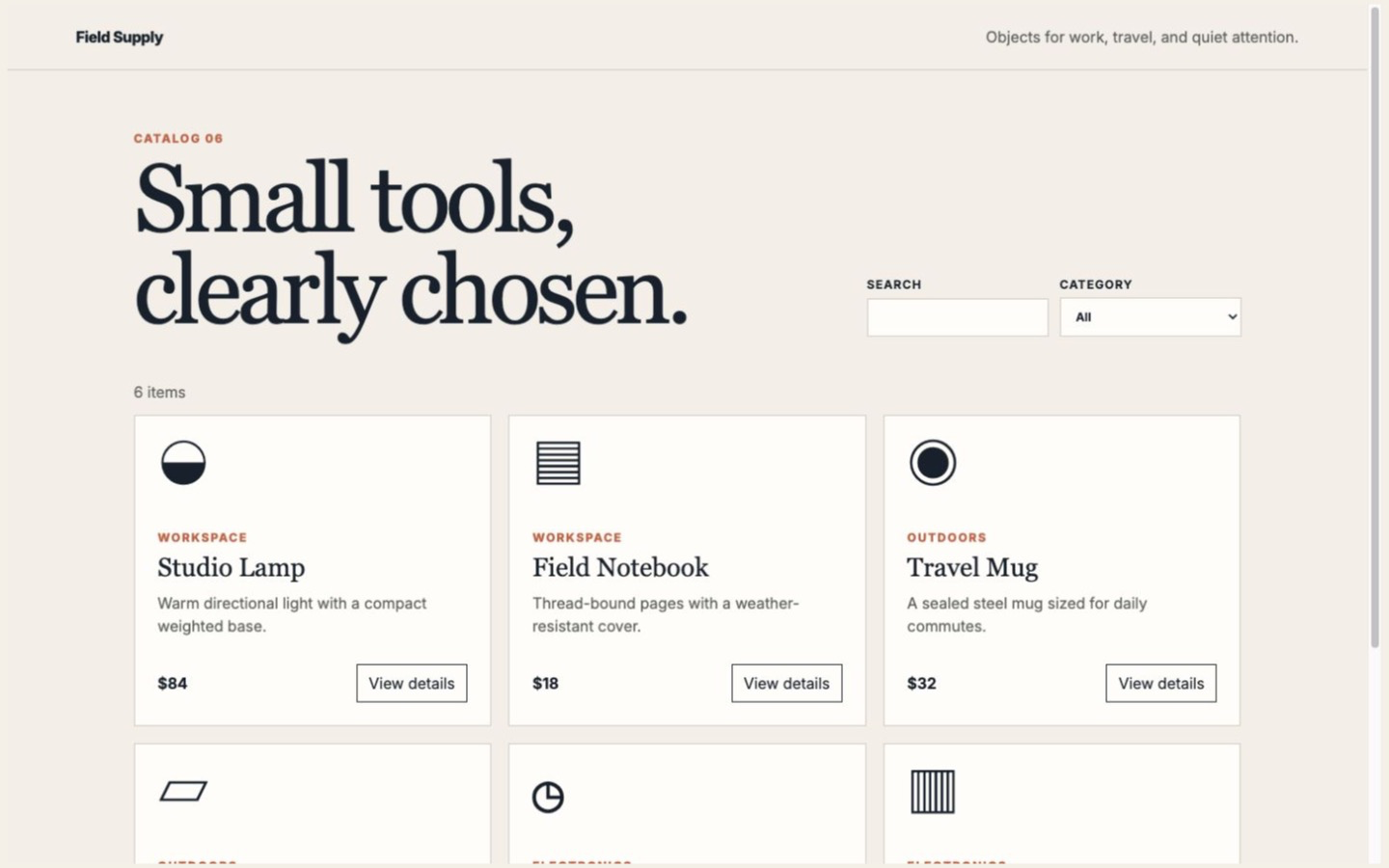
Now the request, in full: “Add favorites to this app.” One sentence. Underneath it, a dozen unasked product questions — surface? persistence? synchronization? evidence? Watch the choices the agent makes, not the typing.
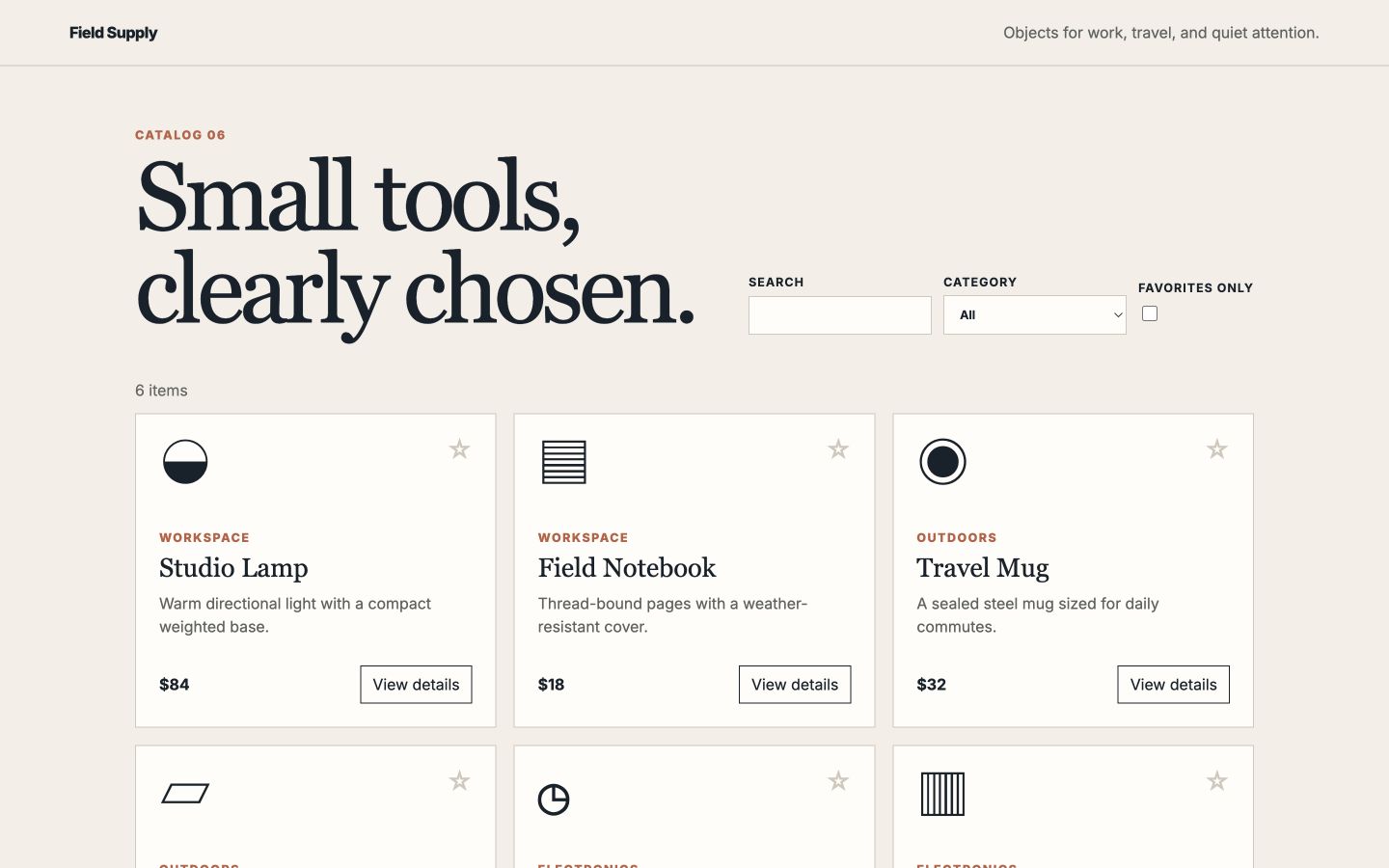
Plausible and functional are not the same as correct.
The favorites worked. But the prompt had quietly made the agent the product manager: an unbounded request became agent-owned product decisions. It invented a favorites-only filter — an extra surface no one asked for — and left a stale baseline assertion unreconciled. The evidence exposed the gap the request never closed.
A useful specification has six sides. It bounds the problem without dictating the solution — implementation freedom, inside observable boundaries.
The two that carry the weight are positive and negative. A positive specification describes behavior without prescribing structure. A negative one protects adjacency with concrete, verifiable boundaries.
Assembled, the whole box is something the agent can finally see:
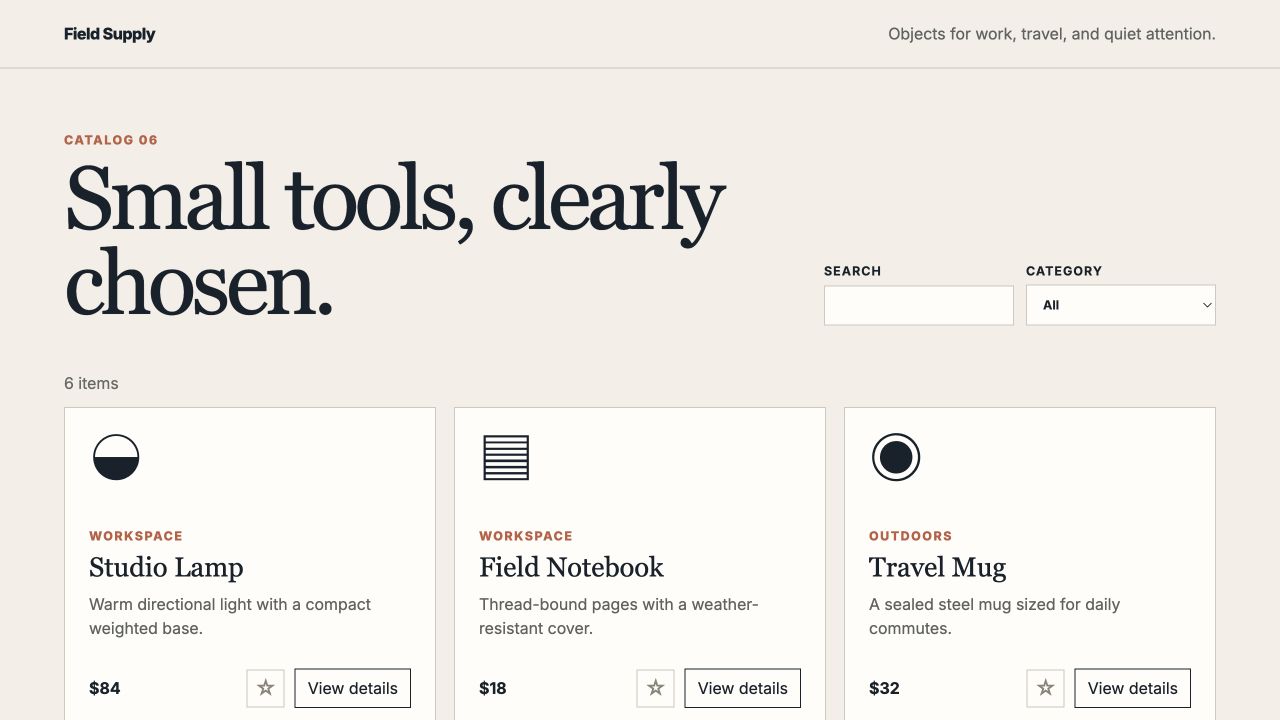
Same app. Same agent. Fewer invented decisions. The specification did not score higher — it prevented unrequested product invention.
| Evidence / scope | Literal | Specification |
|---|---|---|
| Acceptance behavior | 6 / 6 | 6 / 6 |
| Automated suite | 10 / 11 | 10 / 11 |
| Failing assertion | obsolete baseline | same obsolete test |
| Product scope | extra filter | in scope |
| Agent discretion | invented UI | used within boundary |

Draw the box.
Leave room inside.
Comments